
By Nilson Silva, Master Touch Outdoor Living
We get a lot of calls from homeowners and realtors looking for pool inspections when they’re buying a home. And I get it. You’re about to make one of the biggest purchases of your life, and there’s a pool sitting in that backyard that nobody really knows the history of.
Full inspections are something fun and very hard to do. But at Master Touch Outdoor Living we have the technology and the ability to provide you a very detailed inspection. Let me walk you through how it actually works, because there’s a big difference between a real pool inspection and someone walking around the deck for ten minutes.
The Two Types of Pool Inspections
There are a few ways of doing an inspection:
- A full visual inspection. We walk the property, check the equipment, look for the warning signs. It’s useful, but it’s not as detailed as it should be.
- A full inspection. We dive in the pool, we do a full leak detection, we pressure test the pipes, and we go through everything piece by piece.
If you’re buying a home, you want the second one. The visual gives you a good base to start, but it’s not 100% accurate. Only the full inspection tells you what you’re really buying.
Timing Is Everything (And Most People Call Too Late)
One of the things we have to consider when doing inspections is proper timing. Often homeowners and realtors don’t call us with enough time for us to do a full leak detection.
Why? Doing a leak detection sometimes takes a long time depending on how complex the pool is, how many water features it has, how much water the pool is losing, and a bunch of other factors that make the job a little bit harder. In order to properly do a full leak detection and a pool inspection, we need enough time.
Sometimes we don’t find the leak the first time. But we don’t stop until we’re done finding that leak.
So if you’re a realtor with a buyer under contract, don’t wait until three days before the inspection period ends. Call us the moment the contract is signed.

Permits: The Problem Nobody Talks About
There are many issues when it comes to leak detections and full inspections because we have to determine how old the equipment is and if it complies with the code. We have to check permits and the status of the work that was done. In South Florida we have many, many homeowners that do jobs without a permit.
With that being said, in order to do a proper inspection report we need to verify with the city what upgrades were done. For example: was the decking bond done?
Why am I saying this? Because a lot of people will just install a deck without doing the proper decking bond. Or they’ll replace a heater, upgrade a pump, without pulling the proper permits to get the job done and inspected properly. In Broward and Palm Beach County, replacing a pool heater requires a permit. A lot of homeowners skip it. When you buy that house, their shortcut becomes your problem.
The Tools We Use
At Master Touch we have devices we can use to determine water loss, like the Anderson leak detection tools that allow us to measure exactly how much water the pool is losing. This is how we separate normal evaporation from a real leak. In the Florida heat, every pool loses some water. The question is how much, and where it’s going.
What We Can Tell the Moment We Walk Into a Property
There are many things we can tell when we walk into a property, before we even touch the equipment:
- The quality of the water.
- If there’s a garden hose sitting around the deck. That usually means somebody is topping off the pool constantly. That’s a red flag.
- How’s the chemistry?
- When was the last time the pool guy was there?
Then there are a few tricks we use as pool professionals to get a good sense during the visual inspection. We look at areas like:
- The pool beam
- The surface of the pool
- Any algae stain on the pool tile line
A lot of these will determine if the pool has lost water before or not. Again, the visual inspection is not 100% accurate, but it gives you a good base to start.

It’s Not Just About the Plaster
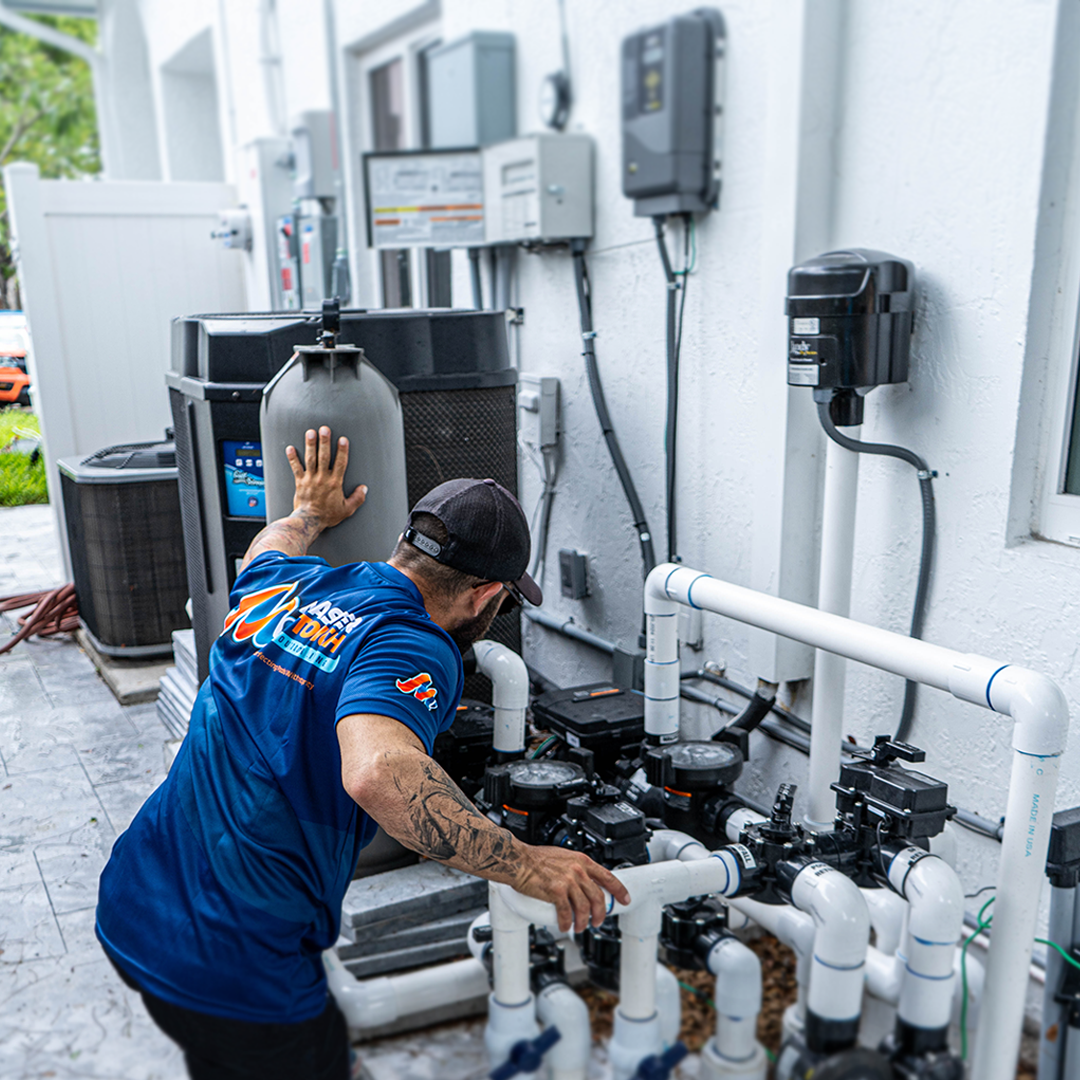
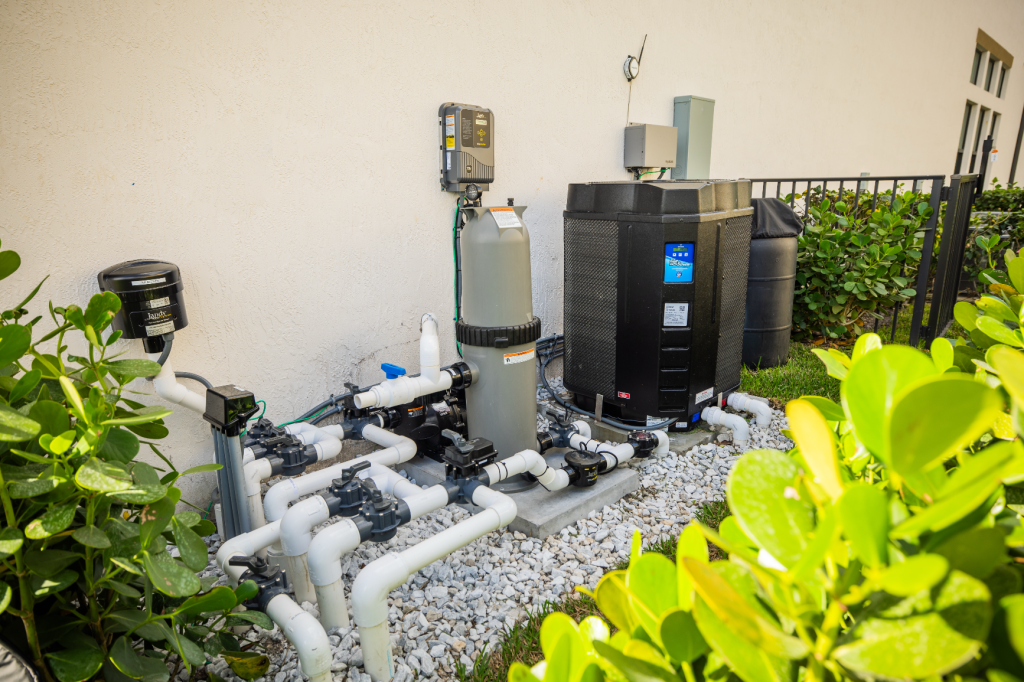
Checking the equipment bonding, the timer age, and all the other items around a swimming pool will help you determine how much money you’re eventually going to spend fixing these things. A lot of people are just concerned with the plaster, meaning the resurfacing of the pool. However, there are deeper problems than that, such as:
- A broken main drain
- Multiple broken pipes
- A pool that’s out of code
And that last one is a big deal. A pool that’s not up to code is a very big liability. The Florida Building Code requires all the metal parts of a pool, the deck, and the equipment to be bonded together, which means they’re all connected electrically so no dangerous voltage can build up between the water, the deck, and anything you touch. When that bonding isn’t done right, or the deck was poured without it, people in and around that pool can get shocked by stray electrical current. And here in Florida, the lightning capital of the country, with pumps, heaters, and lights all running on electricity around water, that’s not a risk you want to take on with a house you just bought.
Frequently Asked Questions About Pool Inspections
Is a pool inspection included in a regular home inspection?
Usually not, and this is where a lot of buyers get burned. Most home inspectors will turn on the pump, look at the water, and that’s about it. They’re not diving the pool, pressure testing the pipes, or checking permits with the city. If you’re buying a home with a pool, you want a pool professional doing a dedicated pool inspection.
How long does a pool leak detection take?
It depends on the pool. A simple pool can take a few hours. A complex pool with a spillover spa, water features, and multiple sets of pipes can take much longer, and sometimes we don’t find the leak on the first visit. That’s why timing matters so much when you’re under contract. Call us as early in the inspection period as possible.
How can I tell if a pool is leaking before I buy the house?
Look for the signs I mentioned above: a hose near the deck, bad chemistry, algae stains at the tile line. Those give you a good base, but they’re not proof. Only a full leak detection with the right equipment can confirm it.
What happens if the pool was remodeled without permits?
In South Florida this happens all the time. Decks get poured without the bonding inspection, heaters get swapped without a permit. When you buy the home, those problems become yours: safety issues, possible insurance headaches, and the cost of bringing everything up to code comes out of your pocket.
How much does a pool inspection cost when buying a home?
It depends on the level of inspection. A visual costs less but tells you less. A full inspection with leak detection and pressure testing usually runs about $1,100. That might sound like a lot until you compare it to the price of a broken main drain, a set of broken pipes, or bringing a pool up to code. The inspection is the cheapest part of the whole deal.

Buying a Home With a Pool? Call Master Touch First.
Whether you’re a homeowner or a realtor with a buyer under contract, don’t gamble on the biggest backyard feature of the house. We dive it, we test it, we check the permits, and we don’t stop until we have answers. Contact Master Touch Outdoor Living to schedule your full pool inspection. We serve Broward and Palm Beach County, and the earlier you call, the better we can protect your purchase.


